You don’t need fancy moves to win a kickboxing fight. You need a few simple kickboxing combinations that you can throw without thinking.
In this post, I break down five kickboxing combinations from coach Vicente García. He says he has done them “a thousand times.”
Each combination has a time stamp, so you can jump straight to it in the video.
In this post:
What Are One-Step Sparring Drills?
I like to call these One-Step Sparring Drills. Some people call them Dutch Kickboxing Drills because this style of training is popular among fighters from the Netherlands (Holland). To see one of the greatest Dutch kickboxers in action, watch these classic Ernesto Hoost fights.
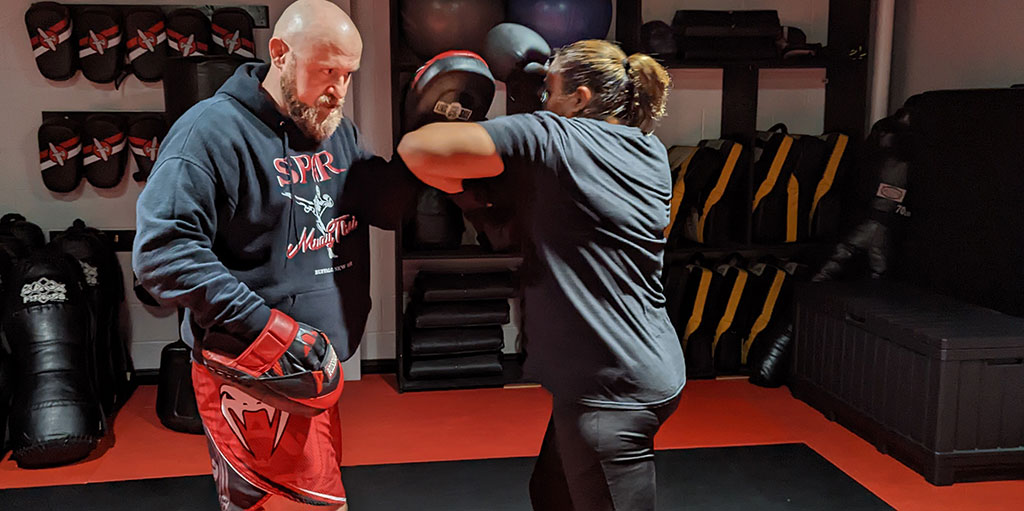
Instead of hitting Thai pads, you face a training partner and practice your combinations together. For more partner drills, see Jonathan Haggerty’s Muay Thai drills. To see how I write drills like these in my notes, read my Muay Thai shorthand key.
- Punches: your partner uses their hands like focus mitts to catch them. This lets you practice your strikes without hitting your partner in the head.
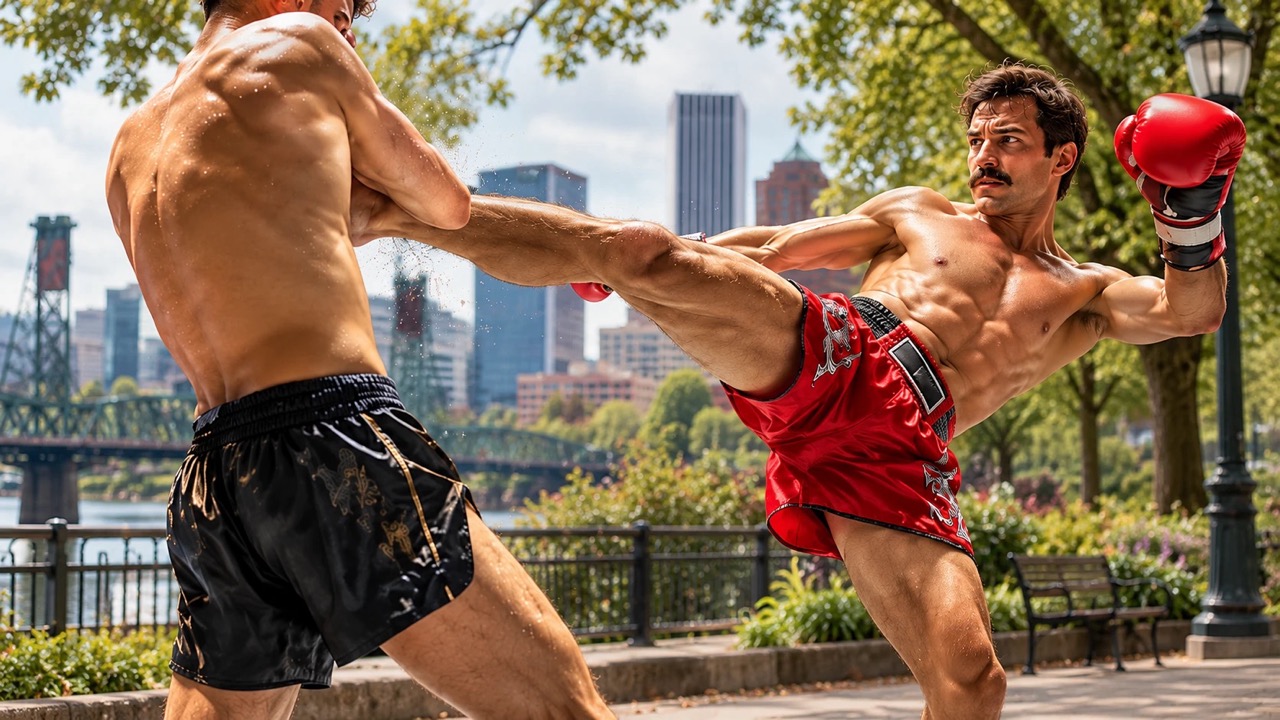
- High Round Kicks: your partner defends with a Dutch Block, sometimes called an X-Block, using both arms to protect their head.
- Low Round Kicks: your partner absorbs the kick on their thigh, just as they might in a real fight. They brace their leg, tighten their muscles, and lean slightly into the kick to help absorb the impact. Start with light contact and increase the power as both partners become comfortable.
These drills help you improve your timing, distance, combinations, and defense while working with a real training partner.
Who Is Teaching?
Vicente García runs the Vicente García Striking Center and teaches kickboxing on his YouTube channel.
The video is in Spanish, so I’ll explain each combination in plain English.
In the video, García demonstrates each combination with a partner who stays in place and keeps his guard up.
He believes training partners should avoid hard punches to the head during practice. Body shots are fine, as long as your partner is prepared for them.
A Few Words You’ll Hear
- Lead and Rear: your Lead side is the side closest to your opponent. If you are right-handed (Orthodox Stance), your Lead side is your left arm and leg.
- Jab: a quick, straight punch with your Lead Hand. García calls it “the touch,” because it sets up everything else. For more on punches, see my breakdown of Boxing Punches and how to defend them.
- Low Round Kick: a Round Kick to your opponent’s thigh, thrown with the shin. For more on kicks, see my breakdown of Muay Thai Kicks and how to defend them.
- High Round Kick: a Round Kick to the head.
- Middle Round Kick: a Round Kick to the body.
- Switch Kick: a quick hop that swaps your feet, so your Lead Leg can kick with the power of a Rear Leg kick.
- Hop Step: a small hop on your support foot that adds speed and power to a kick.
- Pendulum Step: a quick shuffle where your back foot slides up toward your front foot, so your front leg can kick.
- Triangle Step: a small step at a 45-degree angle before a kick. It moves you off your opponent’s centerline and opens your hips, so the kick lands with more power.
- Switching your guard: changing from Orthodox Stance to Southpaw Stance, or back, in the middle of a combination.
The combinations below are written for right-handed fighters. If you are left-handed, simply reverse the strikes. Use your right hand or leg instead of your left, and your left instead of your right.
Combination 1: Slow Them Down, Then Go Up Top
Watch it at 1:06
García starts by slowing his opponent down with a kick to the inside of the leg. Once the opponent slows down, he goes up top.
- Jab
- Low Switch Kick
- Cross
- Lead Uppercut
- High Round Kick
Combination 2: Angle Off for the Low Round Kick
Watch it at 2:05
This one is super basic, and that is why it works. García says every fighter should know it.
- Jab
- Cross
- Switch Kick
- Rear Cross
- Lead Hook
- Rear Low Round Kick
To see why the Low Round Kick works so well against fighters who punch a lot, read how Low Kicks take away an opponent’s movement.
Combination 3: Changing Levels
Watch it at 2:54
Three punches make your opponent cover their head. While their hands are busy, the kick comes in.
- Jab
- Rear Cross
- Lead Hook (or a wider swing, if your opponent is farther away)
- Rear Low Round Kick
- Lead Hook
- Triangle Step
- Rear High Round Kick to the Head
Tip: Throw the punches fast, then kick right away. Don’t wait between the hands and the kick.
For a real fight example of punches setting up a High Round Kick, see how Andre Fili set up his head kick knockout.
Combination 4: Working in a Liver Hook
Watch it at 4:13
This combination is a little more advanced, but García says it is very effective.
The key is to keep changing your target. You start with punches to the head, drop down to the body, return to the head, and then attack the liver. You finish by stepping to an angle and throwing a powerful Round Kick to the head.
- Jab to the Head
- Rear Body Cross: Bend your knees, almost like a squat, as you punch toward the stomach.
- Lead Hook to the Head
- Rear Overhand Punch to the Head
- Lead Body Hook to the Liver: Drop your level again and drive your Hook into the liver.
- Triangle Step to the Left, then Rear Round Kick to the Head: Step 45 degrees to your left to create an angle, then finish with a Rear Round Kick to the head.
Tip: Watch García’s Right Foot as he prepares for the final High Round Kick. He uses a small Hop Step to help launch his Rear Round Kick with more power.
Keep Your Punches Flowing
García also explains the importance of rhythm. As one punch returns to your guard, the next punch should already be moving toward your opponent.
Think of it as one continuous series of punches rather than separate strikes. You want to avoid leaving gaps between your attacks.
The goal is to keep your opponent guessing by attacking different targets. Changing levels and angles makes it harder for your opponent to predict your next strike.
Combination 5: Switching Your Guard
Watch it at 6:10
García saves this combination for last because it is more advanced. It involves switching your stance, changing your angle, and throwing kicks from both sides.
The combination starts with a fast, light High Round Kick. García describes it as landing “like a slap,” similar to a snapping kick in karate. The goal is speed, not power.
- Jab: Start with a quick Lead Jab.
- Pendulum Step + Lead Snapping Round Kick to the Head: Use a quick Pendulum Step to launch your Lead Leg toward your opponent’s head. Keep the kick fast and light, without taking an extra step.
- Switch to Southpaw: Bring your Left Leg back and land in a Southpaw Stance, with your Right Foot forward. This also creates distance, making it harder for your opponent to counter with punches.
- Left Round Kick to the Ribs: As soon as your foot touches the mat, bounce right back. Throw a powerful Left Round Kick to the ribs.
- Right Uppercut: From your Southpaw Stance, follow up with a Right Uppercut to the head.
- Left Round Kick to the Head: Finish with another Left Round Kick, this time targeting the head. Use a small Hop Step to help generate more speed and power.
Tip: Pay attention to how García switches his stance after the first Round Kick. Instead of returning to his original position, he brings his Left Leg back into Southpaw. This creates distance while setting up his next attack.
The goal is to move smoothly between stances without giving your opponent time to react. Your first High Round Kick is quick and light, but it sets up the more powerful strikes that follow.
Common Mistakes I See With Kickboxing Combinations
Over the years, I’ve noticed that students often make the same mistakes when learning new combinations. Here are a few things to watch for when practicing these drills.
1. Trying to Go Too Fast
When you first learn a combination, slow it down. Make sure you understand each strike and where your feet should be. Once you can perform the entire combination without stopping, gradually increase your speed.
2. Dropping Your Guard
One of the biggest mistakes I see is students dropping their hands when they throw punches or kicks. Remember, every offensive move should have a built-in defense. Keep your hands up and protect your head throughout the combination.
3. Not Using Your Footwork
Pay attention to where your feet are. Sometimes, a small step to the side can make a big difference in how much power you generate. Notice how García uses Triangle Steps, Hop Steps, and stance changes to create better angles for his strikes.
4. Throwing Every Strike With Full Power
Not every punch or kick needs to be a knockout shot. Some strikes are there to distract your opponent or set up the next attack. Learn to mix light, fast strikes with more powerful ones.
5. Pausing Between Strikes
A combination should flow naturally. As one punch returns to your guard, the next strike should already be moving. If you stop after every punch or kick, you give your opponent time to react.
6. Using Too Much Power During Partner Drills
These are partner drills, not actual fights. Your partner is helping you improve your technique, so use control. Communicate with each other, especially when practicing Low Round Kicks and Body Punches.
How to Start Training Kickboxing in Portland
Ready to try these combinations? Here’s how to get started, step by step.
- Watch the video. Pick one combination. Watch it a few times until you can say each strike out loud.
- Practice slowly. Shadowbox it in front of a mirror. Keep your hands up and your balance steady.
- Train with a coach. A video can show you a combination, but it can’t tell you what you’re doing wrong.
- If you’re in the Portland, Oregon area, reach out to me when you’re ready. Use the contact form on TrainWithSean.com.

Train These Kickboxing Combinations With a Coach in Portland
Watching kickboxing videos is a great way to learn new combinations. But watching someone throw a combination and being able to perform it correctly are two different things.
When you train alone, it’s hard to tell if your punches are setting up your kicks. It’s also hard to see if you’re losing your balance or leaving yourself open for a counterattack.
These are mistakes you might not notice on your own. A good coach can spot them immediately.
With my private Muay Thai and kickboxing lessons in Portland, Oregon, you get one-on-one instruction from someone with more than 40 years of martial arts training experience.
I can work on your footwork, timing, balance, defense, and striking combinations. You’ll get personal feedback and corrections as you train.
If you’re brand new, or coming back after years away, I’ll meet you where you are, and we’ll go at your pace.
Ready to stop watching and start training?
Use the contact form on TrainWithSean.com to ask about private lessons in Portland.
Coach Sean Haley
TrainWithSean.com