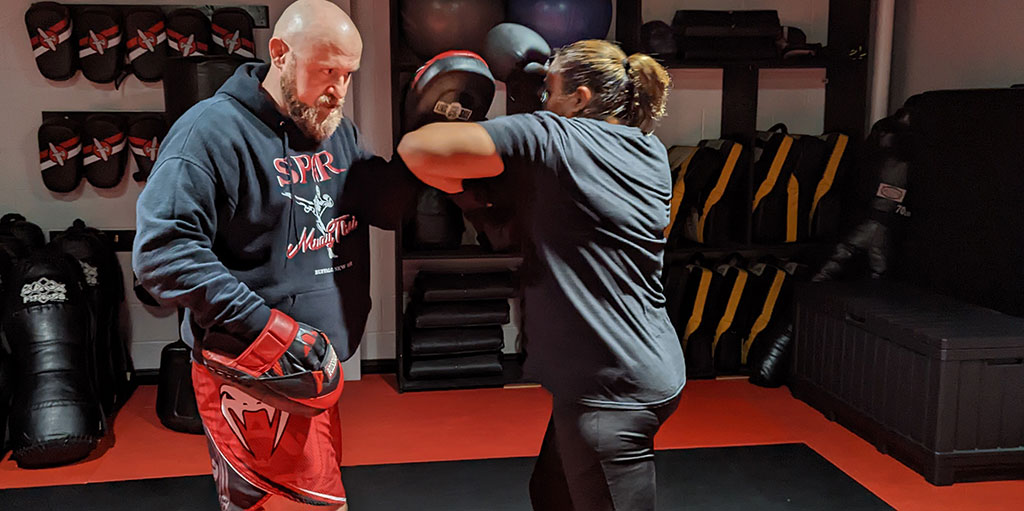
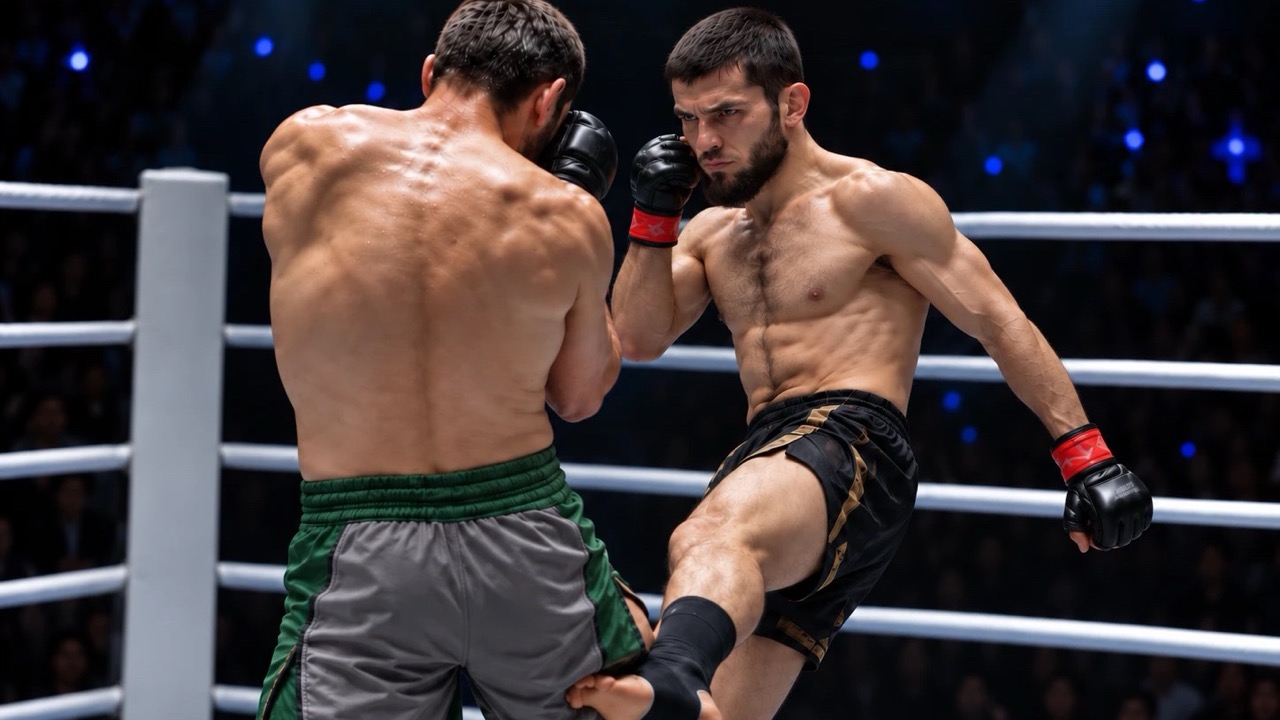
Top photo: AI-generated art.
Fighters have used the Muay Thai Round Kick (Teh / เตะ) for generations, and it still works in modern competition. Muay Thai Round Kicks can attack the legs, the body, or the head. One well-timed kick can change the course of a fight or end it.
ONE Championship has brought Muay Thai to a wider audience through its Global Muay Thai Rule Set. With smaller gloves, shorter fights, and a focus on damage, fighters have to make their strikes count.
The Round Kick fits that style of competition perfectly.
Watch the Video: Muay Thai Round Kicks in Action
Video: ONE Championship on YouTube.
This collection of Round Kicks gives you a chance to study how the technique works in professional fights.
When you watch, look at more than the kicks themselves. Watch how fighters create openings, choose their targets, and set up their kicks with punches.
How ONE Championship’s Rules Change Muay Thai
ONE Championship uses its own Global Muay Thai Rule Set. It differs from traditional five-round stadium fights in a few important ways.
- 4-ounce gloves: Fighters wear small MMA-style gloves, not boxing gloves. That changes how they defend punches and kicks.
- Three-round fights: Regular bouts are three rounds of three minutes each. World championship bouts go five rounds.
- Damage first: Judges look first at damage and knockdowns, then at aggression and control of the ring.
- A faster pace: With fewer rounds, fighters have less time to settle in, so many attack hard from the opening bell.
In this setting, a powerful, accurate Round Kick can change the outcome right away.
Why the Muay Thai Round Kick Works
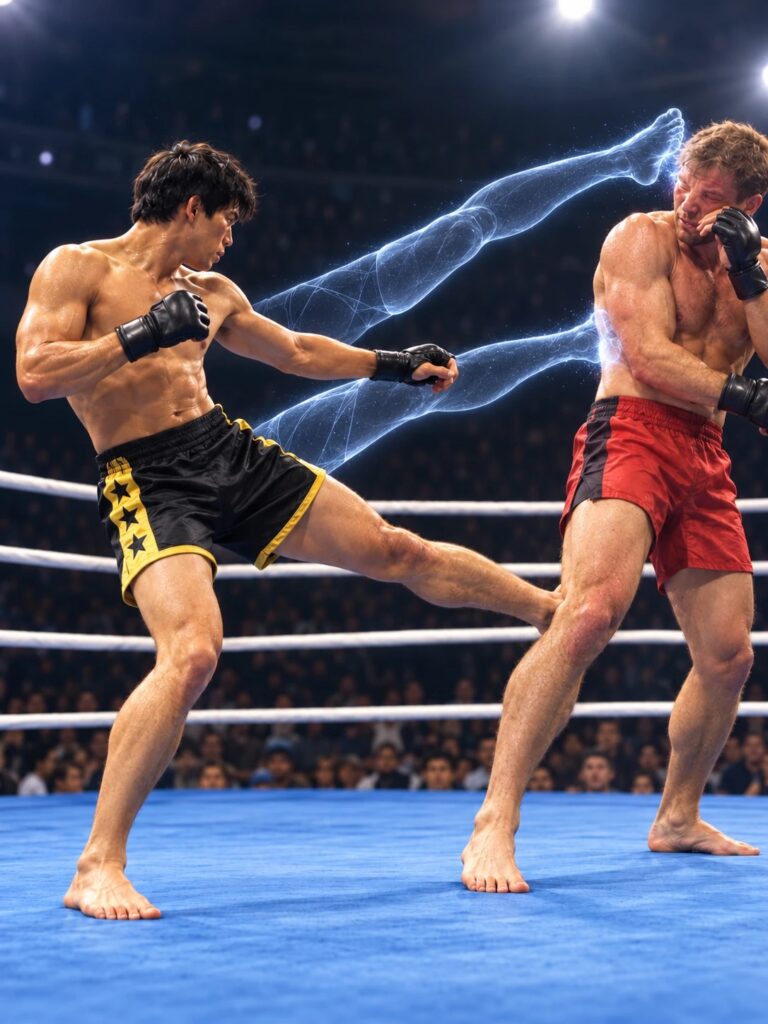
1. Leg Kicks Take Away Your Opponent’s Movement
A fighter who cannot move well is much easier to hit.
Low Round Kicks target the thigh and other legal areas of the leg. Repeated kicks make it hard for an opponent to move forward, change direction, or put weight on the hurt leg.
One of the best examples came in August 2022 at ONE on Prime Video 1. Nong-O Gaiyanghadao defended his ONE bantamweight Muay Thai title against Liam Harrison.
Nong-O kept attacking Harrison’s Lead Leg. Harrison went down twice, and the fight was stopped in the first round when he could not go on.
The fight showed how a few accurate Low Kicks can finish a world-class opponent without a punch to the head.
For another fight won with kicks to the legs, read my post on Miguel Trindade’s Low Kicks at GLORY 110.
2. Body Kicks Hurt the Ribs and Wear an Opponent Down
The Body Kick is one of the signature techniques of Muay Thai.
When a fighter turns the hip over and drives the shin into the ribs, the impact is hard to ignore. Even when the opponent blocks with an arm, a strong Body Kick still hurts.
Repeated Body Kicks can also affect breathing and slow an opponent’s offense. They force the other fighter to spend more time defending.
Fighters like Tawanchai PK.Saenchai have shown how well Body Kicks work against aggressive opponents. Read how his kicks broke Davit Kiria’s arm.
A good Body Kick has a tactical edge, too. The fighter attacks from kicking range, outside the reach of most punches.
3. Head Kicks Can End a Fight in One Shot
The Head Kick carries more risk because the kicking leg has to travel higher. If it misses or gets blocked, the kicker is often left open.
When it lands cleanly, though, it can knock an opponent out on the spot.
A Head Kick often works because of what comes before it. A fighter who keeps kicking the legs and body gets the opponent to defend low. Punches can also draw the opponent’s eyes to the hands, which opens a path to the head.
For a close look at one setup, read my post on Andre Fili’s Head Kick.
Why Round Kicks Still Work Against Aggressive Punchers
ONE Championship’s small gloves have made punching a bigger part of modern Muay Thai.
With less glove to cover the face, fighters have to watch for the Jab, Cross, Hook, and Uppercut.
Still, the Round Kick is one of the best answers to an opponent who leans on boxing.
- A Low Kick can stop an opponent who keeps walking forward.
- A Body Kick can punish someone who keeps stepping into punching range.
- A small step to the outside before the kick opens the hips and moves you off the line of a straight punch.
Kicks are not free, of course. A badly timed Round Kick can be caught, checked, or countered with punches.
That is why timing, distance, and a quick return to your stance matter so much.
What to Look For When You Watch
When you watch the ONE Championship video, look for three things:
- The setup: Does the fighter use punches, footwork, or an earlier kick to create the opening?
- The impact: Watch the supporting foot, the hip turning over, and the path of the shin into the target.
- The recovery: See how fast the fighter gets back to a balanced stance, ready to defend or attack again.
These details are worth studying, whether you are just learning the Round Kick or have trained for years. For more on how the great kickers do it, read my post on Saenchai’s Muay Thai kicks.
The Round Kick Still Belongs in Modern Muay Thai
ONE Championship has changed how Muay Thai looks and how fast it moves, but the Round Kick still works. Low Kicks take away movement, Body Kicks wear a fighter down, and Head Kicks end fights. The best fighters mix all three with punches, knees, elbows, footwork, and defense.
If you want to sharpen your own Round Kick, my Muay Thai private lessons in Portland, Oregon work on technique, balance, timing, and how to use the kick in a real exchange.
If you’re in the Portland, Oregon area, reach out to me when you’re ready. Use the contact form on TrainWithSean.com.