Learning how to throw a straight punch starts with the basics, even before you throw your first punch.
The first step is learning how to make a proper fist.
It might sound simple, but making a fist correctly helps protect your hands from injury.
A good stance is just as important because it gives you the balance and power needed to throw effective punches.
In this short video from Beat Boxing Muaythai Gym in Thailand, the coach breaks everything down step by step.
He starts by showing how to make a proper fist, then demonstrates how to throw straight punches with both hands. From there, he adds footwork and puts everything together into a four-punch drill.
In This Post:
The Video: How to Punch, Episode 1
Video: Beat Boxing Muaythai Gym YouTube channel.
Note: This video is in Thai. Since I’m working from an English translation, I’ll focus mainly on what the coach demonstrates rather than his exact words.
Three Thai Terms Worth Knowing
The Thai title of this video includes three useful terms you’ll hear when learning how to punch in Muay Thai.
- Jab (Mat Yaep / หมัดแย็บ): A quick, straight punch thrown with your Lead Hand. The Jab helps you measure distance, interrupt your opponent’s rhythm, and set up other attacks.
- Straight Punch (Mat Trong / หมัดตรง): A punch that travels directly toward its target. In this video, it refers to the Rear Hand Straight Punch, commonly called the Cross in Boxing. You generate power by driving from the floor and rotating your hips and shoulders.
- Punch Combination (Mat Chut / หมัดชุด): Two or more punches thrown together in sequence. A good example is the 1-2 Combination: a Lead Jab followed by a Rear Cross.
In Thai, you will hear the terms for left and right a lot:
- Left: ซ้าย, Saai (pronounced “sigh”)
- Right: ขวา, Khwaa (pronounced “kwaa”)
Know Your Lead Hand and Rear Hand
Your stance determines which hand leads.
- Orthodox Stance: Your left foot and left hand are forward. Your right hand is your Rear Hand.
- Southpaw Stance: Your right foot and right hand are forward. Your left hand is your Rear Hand.
Most right-handed fighters use an Orthodox Stance, while many left-handed fighters prefer Southpaw. However, that’s not always the case.
The Jab and Cross are just the beginning. For more techniques, including the Hook, Uppercut, Overhand, and ways to defend against each punch, check out my complete guide to Muay Thai punches and defenses.
Step 1: How to Make a Proper Fist
Watch it: 0:26
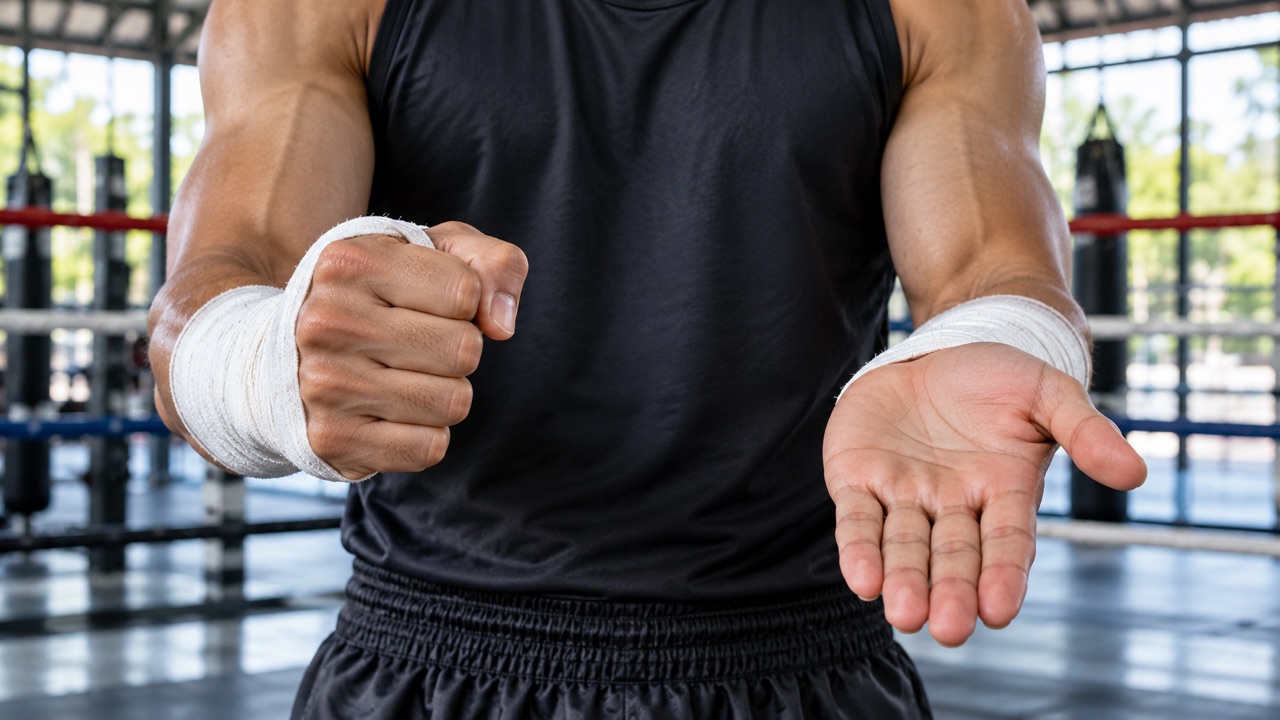
Before learning how to punch, you need to know how to make a proper fist.
In the video, the coach demonstrates three simple steps. The instructions also appear on the screen in Thai.
- Open Your Hand: Start with your hand open, fingers straight and together.
- Bend Your Fingers: Curl your fingers inward, starting at the middle joints.
- Close Your Fist: Continue folding your fingers tightly into your palm until you have a solid fist.
Important: Keep your thumb on the outside of your fist, resting across your fingers. Never tuck it inside your fist. When your punch makes contact, the force of the impact can crush your thumb against your fingers and palm, potentially causing a sprain or even a broken thumb.
When throwing a punch, keep your hand and arm relaxed as the punch travels toward its target. Tighten your fist just before impact, then relax again as you bring your hand back to your guard.
Here’s a simple way to think about it: Imagine you’re holding a tennis ball in your hand. As you throw your punch, keep your grip relaxed. Just before your fist makes contact, imagine squeezing that tennis ball as tightly as you can.
The idea is to stay relaxed while throwing the punch and tighten your fist only when you need it. This helps you punch with speed while keeping your fist and wrist firm at impact.
Step 2: How to Throw a Straight Punch
Watch it: 1:16
Next, the coach demonstrates how to throw the Jab and Rear Straight Punch from a solid fighting stance.
Pay attention to these three important details:
- Keep Your Punch Straight: Your fist travels directly toward the target, with your shoulder supporting the punch. Extend your arm without locking your elbow.
- Punch Down the Center: Your punch should travel straight from your guard toward the target. Avoid swinging your arm out to the side.
- Turn Your Rear Foot: When throwing the Rear Straight Punch, rotate your hips and shoulders while allowing your Rear Foot to pivot naturally. This helps you generate power while maintaining your balance.
My Advice: Every Punch Needs a Built-In Defense
One thing I always remind my students is that every offensive technique should include a built-in defense.
When you throw a punch, your opposite hand stays up to protect your face.
For example, when you throw your Jab, your Rear Hand protects your jaw. When you throw your Cross, your Lead Hand stays up by your face.
This simple habit helps protect you from counter punches and counter kicks while you’re attacking.
Step 3: Putting the Jab and Cross Together
Watch it: 3:55
Now that you’ve learned both Straight Punches, it’s time to put them together.
The coach demonstrates one of the most basic and effective combinations in Boxing and Muay Thai: the Jab-Cross, also known as the 1-2 Combination.
- 1: Jab: Throw your Lead Hand straight toward the target, then bring it back to your guard.
- 2: Cross: Follow immediately with your Rear Hand, rotating your hips, shoulders, and Rear Foot to generate power.
The key is making these two punches work together as one smooth combination.
Remember, punching power doesn’t come from your arms alone. It starts from the ground, travels through your legs and hips, and finishes with your fist.
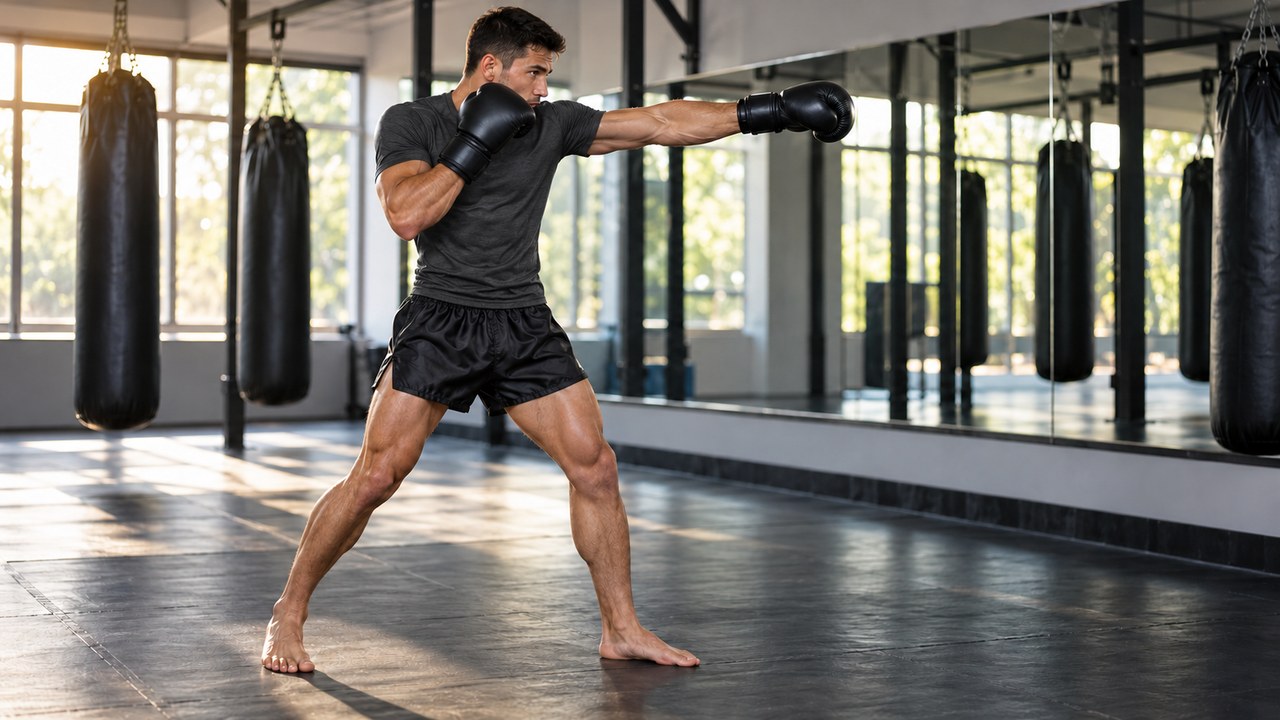
Next, the coach adds footwork to the Jab-Cross Combination.
Watch his feet carefully. As he throws the Jab, he takes a small step forward with his Lead Foot.
Why is this important?
Your Jab is the closest punch to your target. Stepping forward as you throw it helps you close the distance and get within striking range. This puts you in a better position to follow up with your Cross, Hook, or any other strike you want to throw.
Here’s how to practice it:
- Start in your normal fighting stance.
- Take a small step forward with your Lead Foot as you throw the Jab.
- Lift off of your Rear Foot forward enough to maintain your stance and balance.
- Throw your Cross while rotating your hips and shoulders.
- Return to your original position, hands up and ready to defend.
My Advice: Don’t take a huge step just to reach your target. Small, controlled movements help you maintain your balance and put you in a better position to defend or throw another technique.
Step 4: Build Up to Four Straight Punches
Watch it: 4:19
Once you’re comfortable throwing the Jab-Cross Combination, the coach adds two more punches.
Now you’re throwing four Straight Punches in a row:
- Jab (1): Lead Hand
- Cross (2): Rear Hand
- Jab (3): Lead Hand
- Cross (4): Rear Hand
Count them out as you punch: 1-2-3-4.
The goal is to connect all four punches smoothly without losing your balance or dropping your guard.
Start slowly and focus on good technique. As you become more comfortable, gradually increase your speed.
After the fourth punch, return to your fighting stance with both hands up, ready to attack or defend again.
A Simple Straight Punch Practice Plan
You don’t need any special equipment to start practicing these techniques. You can work in front of a mirror, shadowbox, or practice on a heavy bag if you have access to one.
Here’s a simple routine for beginners.
- Make a Fist, 10 Repetitions: Practice opening your hand, curling your fingers, and making a solid fist. Check that your thumb stays outside your fingers.
- Jab, 10 Repetitions: Throw your Lead Hand straight out and bring it back to your guard. Keep your opposite hand up.
- Jab-Cross (1-2), 10 Repetitions: Practice throwing both punches together. Focus on rotating your hips and shoulders while maintaining your balance.
- Stepping Jab-Cross, 10 Repetitions: Take a small step forward with your Jab, follow with your Cross, and return to your original stance.
- Four Straight Punches (1-2-3-4), 5 Sets: Practice throwing four punches in sequence. Concentrate on smooth movements, proper footwork, and keeping your hands up throughout the combination.
Take your time between sets and check your technique before starting again.
My Advice: Technique First, Then Speed and Power
When I teach Straight Punches, I always emphasize proper technique before speed and power.
Start by developing a solid stance, good balance, and correct punching mechanics. Make sure your punches travel straight toward the target and your opposite hand stays up to protect your face.
Don’t rush through the combinations. Practice slowly until the movements become comfortable and natural.
As your technique improves, gradually increase your speed and power without sacrificing your balance or defense.
Remember, a good punch isn’t just about how hard you hit. It’s about proper technique, accuracy, timing, and being ready for whatever comes next.
Next in this series: Muay Thai Jab and 1-2 Combo: Why They’re Different From Boxing.
Learn to Throw a Straight Punch in Portland
These basics are easy to learn wrong on your own. In my Muay Thai and Boxing private lessons, we build your punches one piece at a time, so the good habits stick.
If you’re in the Portland, Oregon area, reach out to me when you’re ready. Use the contact form on TrainWithSean.com.