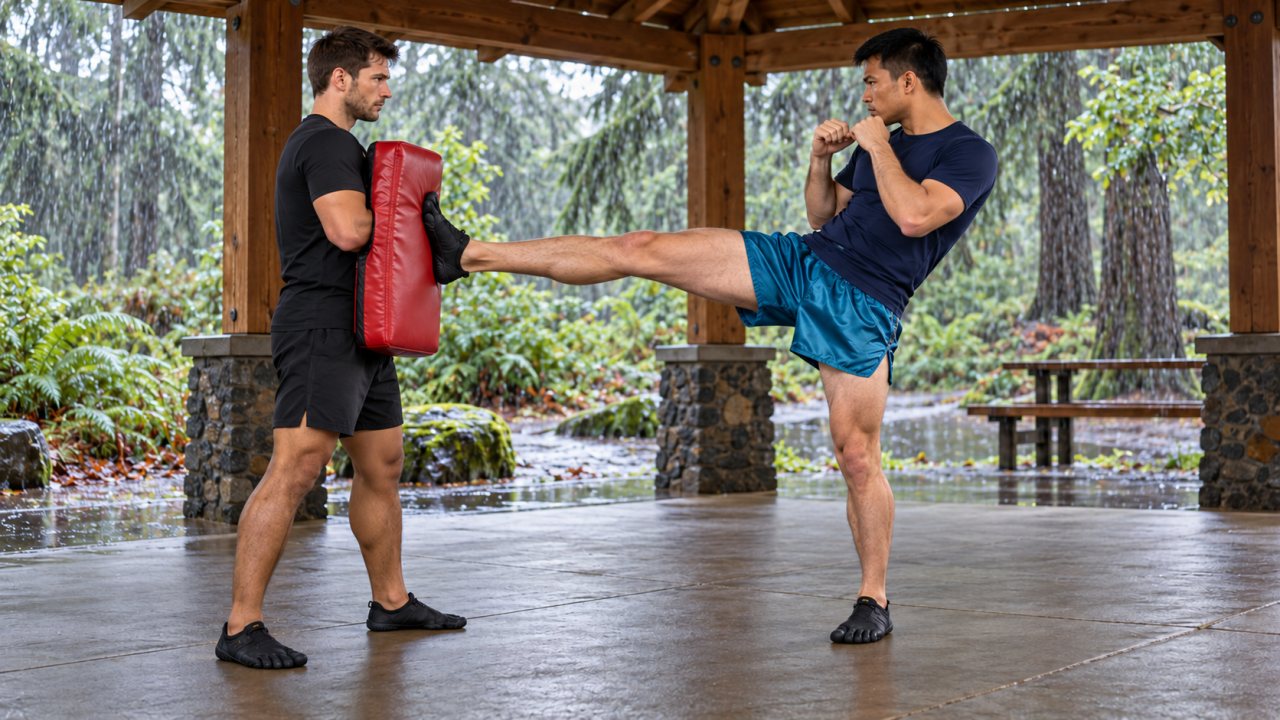
Where does the power behind a strong Teep come from? Most people would say the kicking leg. But Tawanchai PK.Saenchai says the real power comes from your supporting leg.
In September 2022, Tawanchai beat Petchmorakot Petchyindee at ONE 161 in Singapore to win the ONE Featherweight Muay Thai World Title. The Teep is one of his favorite weapons.
Check out one of his most famous bouts in Tawanchai vs. Davit Kiria, where his powerful Round Kicks broke Kiria’s arm.
Here are five important lessons from his class on throwing the Teep.
The Video: Tawanchai Teaches the Teep
Video: TAG Muay Thai YouTube channel, with Tawanchai PK.Saenchai.
Step 1: The Power Comes From Your Standing Leg
Tawanchai starts with something many people overlook: the leg you’re standing on is just as important as the leg you’re kicking with.
Your supporting leg needs to be strong and balanced. Without a solid base, you can lose your balance when your Teep makes contact.
As Tawanchai explains, the power of your Teep depends on the strength and stability of your standing leg.
Step 2: Turn Your Foot and Keep It Flat
Next, Tawanchai demonstrates how he positions both feet to deliver a powerful Teep.
He starts by raising his Lead Knee. As he extends his kicking leg, he turns his toes slightly inward toward the 11 o’clock position instead of pointing them straight up at 12 o’clock.
When the kick lands, the entire sole of his foot makes contact with his opponent, from the ball of the foot to the heel.
His supporting foot is just as important. He turns it slightly outward and keeps it flat on the ground throughout the kick.
Key point: Keep your entire supporting foot on the floor. Don’t rise onto your toes. A solid base helps you keep your balance and deliver more power.
Step 3: Make Your Teep Harder to Catch
The Standard Teep
Tawanchai demonstrates a common way of throwing the Teep, with the toes pointing straight up.
He explains that he doesn’t like throwing it this way because it makes the kicking foot easier for an opponent to catch.
In Muay Thai, catching a kick is legal. Once you catch your opponent’s leg, you can use that position to strike, sweep the supporting leg, or dump your opponent to the mat.
However, you can’t hold the leg for long. You need to act quickly, or the referee will separate you.
That’s why leaving your Teep extended too long can get you into trouble.
Tawanchai’s Preferred Teep
Tawanchai’s solution is simple: turn the toes slightly inward toward the 11 o’clock position.
This changes the angle of the foot, making it harder for an opponent to grab the heel. It also lets him pull his kicking leg back quickly after making contact.
Training tip: A Teep that comes back quickly is harder to catch. Get your foot in, make contact, and bring it right back.
Step 4: The Weak Spot of This Teep
Tawanchai points out a weakness of this kick: jumping or lunging too far forward when you throw it.
This problem shows up when you miss.
If you throw your entire body forward and your opponent moves out of the way, you can lose your balance and leave yourself open to a counterattack.
Instead, Tawanchai focuses on lifting his kicking leg while staying balanced over his supporting leg.
If it misses, he makes sure to quickly bring his foot back, reset his stance, and get ready to defend against his opponent’s next attack.
Step 5: Swing Your Arm and Turn Your Hip for More Power
To generate more power, Tawanchai uses a movement similar to a Round Kick.
For more on how the arm swing powers a kick, read Round Kick Arm Swing: Reach for the Gun, Fling the Sweat.
As he delivers the Teep, he swings his arm and rotates his hips, so more of his body adds power to the kick.
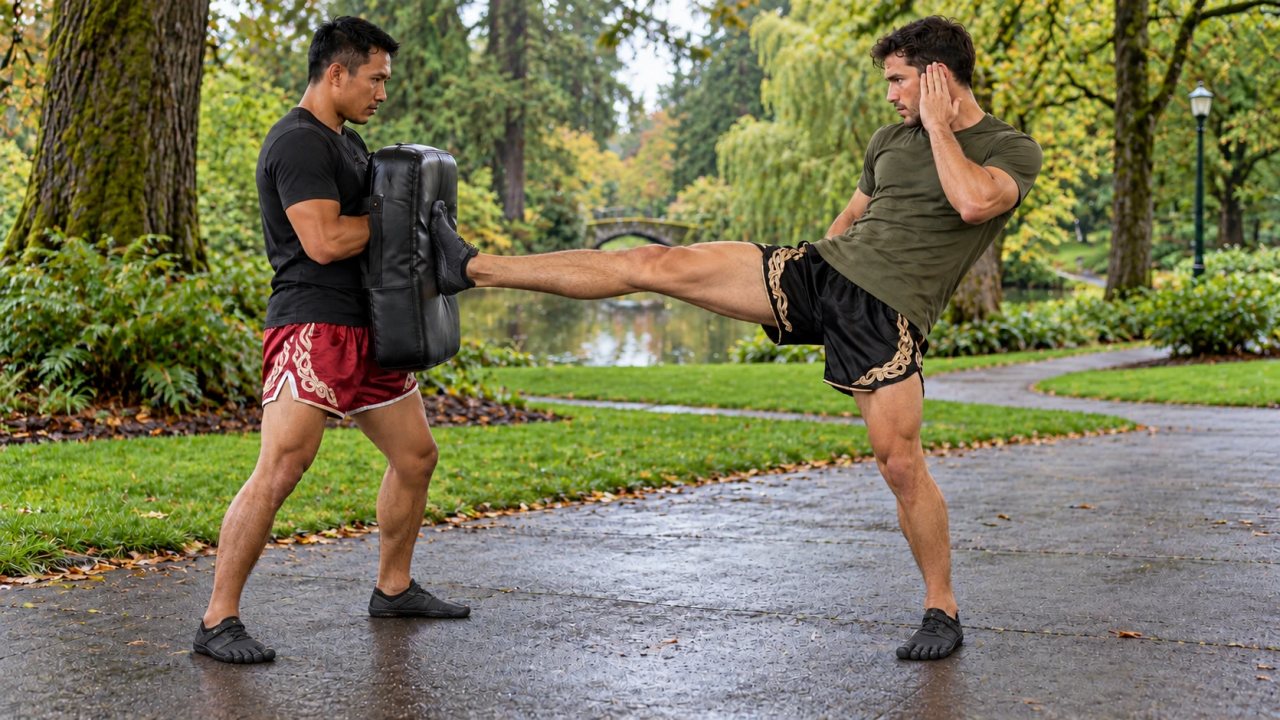
He then demonstrates two ways to deliver it, depending on the distance between him and his opponent.
Version 1: The Teep From Kicking Range
When his opponent is already within range, Tawanchai simply raises his knee and delivers the Teep.
There’s no need to step or jump forward. He stays balanced on his supporting leg, drives the kick into his opponent, and quickly brings his foot back.
Version 2: The Hopping Teep
When his opponent is farther away, Tawanchai uses a small, controlled hop to close the distance.
He raises his kicking knee first, then hops forward on his supporting leg before extending the Teep.
The important difference is that he stays balanced throughout the movement. He’s using the hop to adjust his range, not throwing his entire body forward without control.
If the kick misses, he can still recover his stance and move back to a safer distance.
Final Thoughts
What makes Tawanchai’s Teep so effective isn’t just how hard he kicks. It’s how well he combines power, balance, timing, and distance.
His biggest lesson is that a powerful Teep starts from the ground up.
Keep your supporting foot flat, use your hips to generate power, make the kicking foot difficult to catch, and always be ready to recover your stance.
A good Teep should do more than push your opponent backward. It should also leave you balanced and ready for whatever comes next.
Build a Tawanchai Teep of Your Own in Portland
Balance on one leg is hard to judge on your own. This is easier to learn with a coach watching. In my Muay Thai private lessons, we build your standing leg first, then the kick.
Learn more about my Muay Thai private lessons in Portland.
If you’re in the Portland, Oregon area, reach out to me when you’re ready. Use the contact form on TrainWithSean.com.