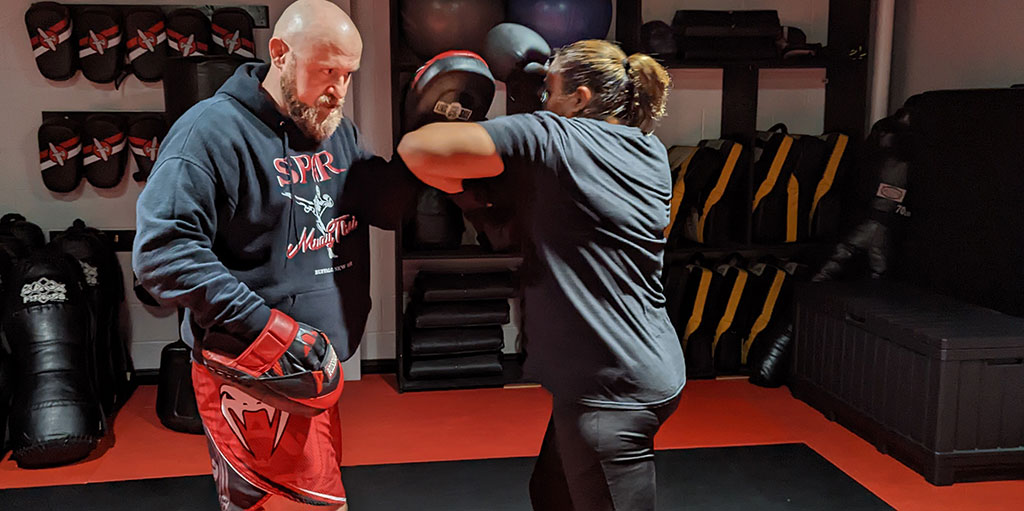
Every fighter starts in the same place: how to stand. Your Muay Thai stance is the base for every strike you will ever throw:
- Punch (Mat /หมัด)
- Kick (Teh /เตะ)
- Elbow (Sok /ศอก)
- Knee (Khao /เข่า)
This post starts a new series built on THAI FIGHT’s “Muay Thai Tutorial” videos. Each video is about two minutes long and spoken in Thai. I’ll walk you through what is taught, in plain English.
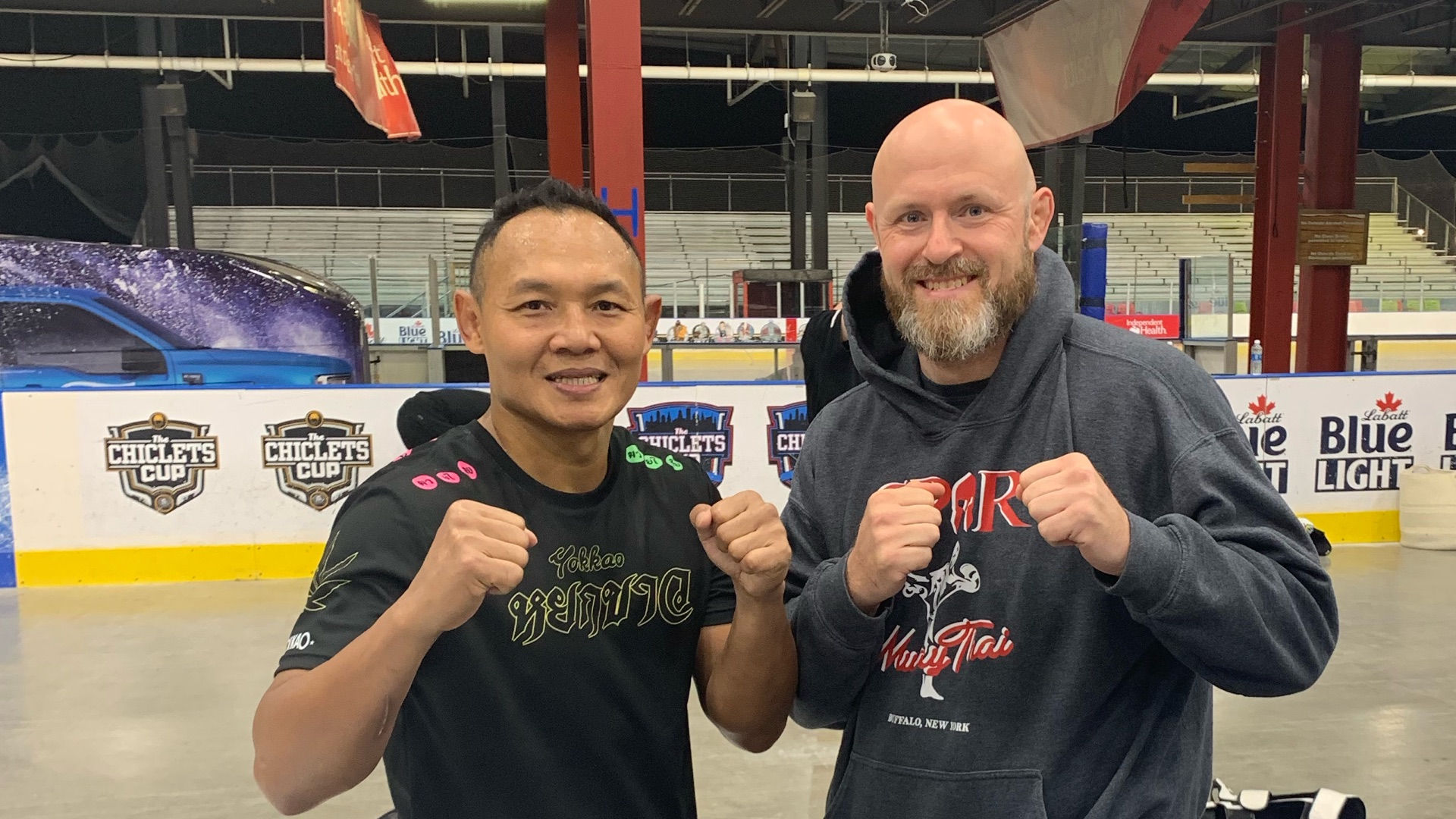
The teacher in these first two videos is Saenchai, one of the greatest Muay Thai fighters of all time. I had the chance to take part in two of his seminars while I was living in Buffalo, New York.
Who Is Saenchai?
Saenchai is a Thai fighter who won titles at Lumpinee Stadium in Bangkok more than once. Fans love him for his speed, his balance and his playful style. He often fought bigger opponents and still made it look easy.
He fights from Southpaw Stance, and he runs his own gym in Bangkok, PK.Saenchai Muay Thai Gym.
First, a Few Words You’ll Hear
- Wai Khru (ไหว้ครู): the ritual a Muay Thai fighter performs in the ring before a fight. It means “paying respect to the teacher.”
- Teacher (Kru /ครู): the word Thai fighters use for their coach.
- Lead and Rear: your Lead side is the side closest to your opponent. Your Rear side is the side farther back.
- Orthodox Stance: the usual stance for a right-handed fighter. Your Lead side is your left arm and left leg.
- Southpaw Stance: the usual stance for a left-handed fighter. Your Lead side is your right arm and right leg.
- Stance (Tah Yuen /ท่ายืน): how you stand, with your feet set and your hands up.
- Guard (Gard /การ์ด): where you hold your hands to protect your head. Thai fighters use the English word.
Part 1: Why Fighters Do the Wai Khru
Watch Saenchai explain it: 0:20
Before a Muay Thai fight, each fighter performs a slow, graceful ritual in the ring. Saenchai gives three good reasons why every fighter does it.
1. It honors your teacher. The Wai Khru reminds you of the coach who taught you. Your teacher passed their knowledge on to you, and this is how you say thank you.
2. It helps you focus. The ritual calms your mind before you face your opponent, so you leave everything else outside the ring.
3. It loosens you up. The slow movements stretch your body before the first round starts.
He also gives a helpful tip about how long it should take. A Wai Khru done too fast won’t stretch you enough. One done too long can tire you out before the fight. Aim for the middle, so you save your energy for the fight.
Saenchai says a teacher is like a parent. Your teacher gives you skills for fighting and for life. Without a teacher, you would not have made it this far.
Part 2: The Muay Thai Stance
Watch Saenchai set his stance: 0:34
Saenchai says a good Muay Thai stance does two jobs for you. It keeps your body balanced, so you don’t tip over when you move. It also lets you throw your weapons smoothly and quickly.
Set Your Feet
Saenchai is left-handed, so he shows the Southpaw Stance first. He puts his right leg in front and his left leg behind.
If you are right-handed, just flip it: your left leg goes in front, and your right leg goes behind.
- Lead Foot forward, Rear Foot back
- Feet about shoulder-width apart
- Don’t spread your feet too far apart
(Tip: if your feet are too wide, you lose your balance when you lift a leg to Kick or Knee.)
Lift the Rear Heel
Watch it at 0:38
Saenchai lifts his Rear Heel a little off the floor. This puts your weight on the ball of your Rear Foot.
He says this lets you throw a Kick, a Knee or an Elbow faster. Your Rear Leg is loaded and ready to go the moment you need it.
Put Your Guard Up and Stay Relaxed
Stay relaxed: watch it at 1:03
Saenchai tells you not to be stiff in your stance. Your body can move freely, but your hands stay in place. A tense fighter gets tired fast and reacts slowly to what’s coming.
Hands at eye level: watch it at 1:08
Raise your guard, with your hands up at eye level, and don’t let them drop. When your opponent throws, your hands are already there to defend.
Here is the whole stance as a quick checklist:
- Lead Foot forward, Rear Foot back
- Feet not too wide
- Rear Heel up a little
- Guard up at eye level
- Shoulders and body relaxed
Common Stance Mistakes I See
These are the mistakes I see most often with new students. Every one of them is easy to fix once you know to look for it.
- Feet in a straight line. If your Lead Foot sits right in front of your Rear Foot, a small push knocks you sideways. Keep a little space between them, side to side.
- Flat on both feet. With your Rear Heel flat on the floor, your Kicks and Knees start slowly. Lift the heel just a bit.
- Hands drifting down. Most people drop their hands when they get tired. Your guard stays at eye level, even when your arms feel heavy.
- Chin up in the air. Keep your chin tucked down behind your guard. A raised chin is an easy target.
- Holding your breath. Many beginners tense up and stop breathing. Breathe out through your nose, stay loose, and let your shoulders drop.
Fix these five things, and your stance will already look a lot like Saenchai’s.
Why the Basics Matter So Much
The stance looks simple, so many beginners rush past it to get to the fun stuff. Every strike in Muay Thai starts in your stance and ends back in it.
If your feet are in the wrong place, your Kicks lose power and your balance goes with them. If your guard drops, you get hit. If you are stiff, you get tired long before the round is over.
Even a fighter like Saenchai still teaches the stance first. He knows the basics are what make everything else work.
How to Start Training in Portland
Here is how to get started, step by step:
- Watch both videos. Pause on Saenchai’s stance and copy it in front of a mirror.
- Practice it slowly every day. Check your feet, your Rear Heel and your guard every time.
- If you’re in the Portland, Oregon area, reach out to me when you’re ready. Use the contact form on TrainWithSean.com.
Learn Your Muay Thai Stance With a Coach
The Wai Khru teaches respect for your teacher, focus and a good warm-up. The Muay Thai stance teaches balance, speed and a guard that stays up. Saenchai covers both of them in under five minutes of video.
A video can show you the shape, but it can’t see you.
In a private class, I watch your feet, your hands and your balance on every rep.
I’ve been a Certified Muay Thai Instructor since 1997, and I teach Muay Thai private lessons in Portland, Oregon.
Next in this series: Punches, with each strike shown next to its defense. Until then, read How to Perfect Your Jab in Muay Thai and Why Your Muay Thai Rear Cross Lacks Power.
Coach Sean Haley
TrainWithSean.com