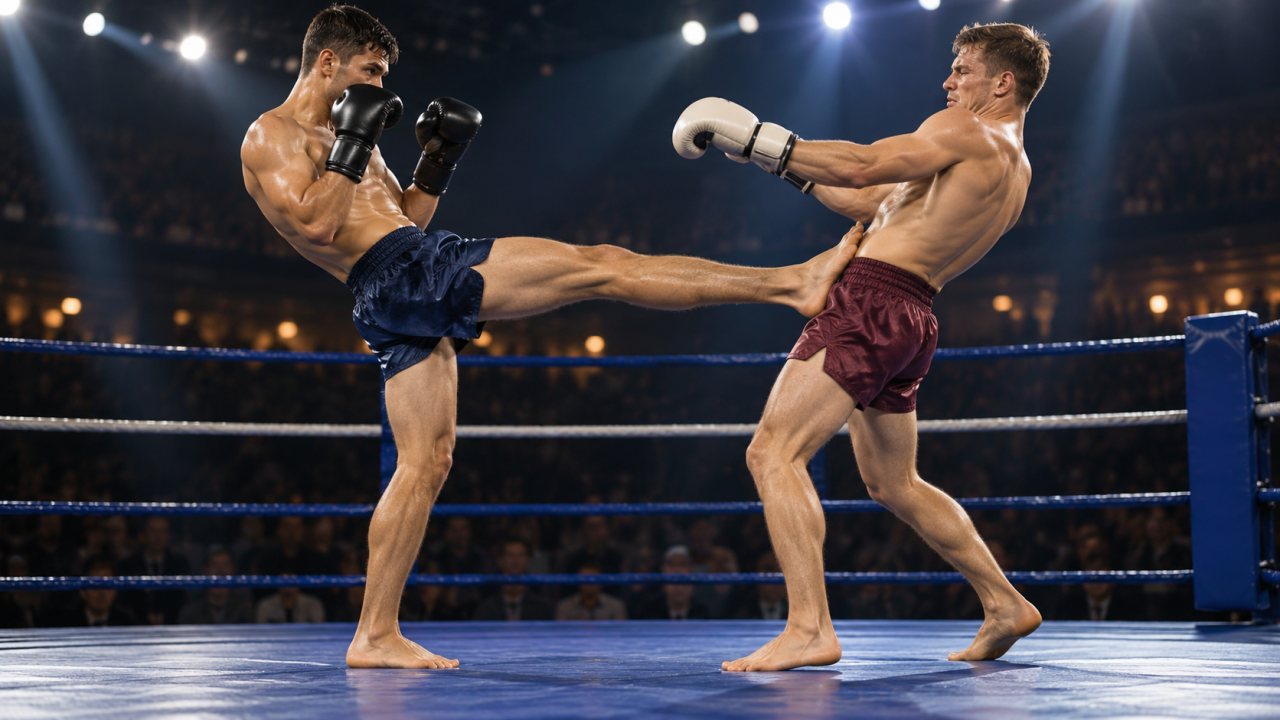
The Muay Thai Push Kick, better known as the Teep (ถีบ), is one of the most useful weapons in Muay Thai. Most people learn how to throw it, but knowing when and why to use it is just as important.
The Teep can help you control distance, stop an aggressive opponent, knock someone off balance, attack their lead leg, or set up your next strike.
In this video from Shane Fazen’s fightTIPS YouTube channel, professional Muay Thai fighter Sean Fagan, also known as Muay Thai Guy, demonstrates five different ways to use the Teep.
In this post:
The Video: Sean Fagan’s 5 Ways to Use the Muay Thai Push Kick
1. Use the Teep to Find Your Range
Watch it: 0:13
The first way to use the Teep is as a rangefinder.
Because your legs are longer than your arms, the Teep is one of your longest weapons. You can use it to measure the distance between you and your opponent without having to move into Boxing Range.
For example, if you can reach your opponent with your Teep, that gives you a good idea of how far away you are. From there, you can judge whether you need to step closer to throw a Round Kick or move into range for your punches.
Think of it like using your Jab in Boxing. You’re not necessarily trying to hurt your opponent. You’re gathering information about distance while making them react to you.
My takeaway: Don’t throw every Teep as hard as you can. Sometimes a quick, light Teep is all you need to figure out your range and set up your next attack.
2. Use the Teep to Stop an Opponent Charging Forward
Watch it: 0:38
The second use is defensive.
Let’s say you’re sparring someone who likes to come forward aggressively, throwing punches and putting pressure on you.
Instead of standing there and trading punches, you can hold your ground and throw a Teep into their stomach as they move toward you.
You can use either your Lead Teep or Rear Teep, depending on the distance and timing.
What makes this effective is that your opponent is moving into your kick. Their forward momentum adds to the impact of the Teep.
And don’t underestimate how much a good Teep to the stomach can hurt.
Just like taking a hard punch to the body, a well-timed Teep can knock the wind out of you. It can interrupt your breathing, slow you down, and make you think twice about charging forward again.
Over several rounds, repeated body shots can wear an opponent down and drain them of their energy.
My takeaway: A good defensive Teep doesn’t have to send someone flying. Sometimes all you need to do is stop their forward movement, break their rhythm, and make them start over.
3. Use the Teep to Knock Your Opponent Backward
Watch it: 0:59
Now we’re going to use the Teep offensively.
Instead of waiting for your opponent to come forward, you’re going to use the kick to drive them backward.
Remember that scene in the movie 300 when King Leonidas kicks the guy into the pit while yelling, “This is Sparta!”?
GIF: “This Is Sparta!” from 300, via Tenor.
That’s the general idea, although you don’t need to be quite that dramatic.
A powerful Rear Teep can drive your opponent backward, knock them off balance, and force them to give up ground.
One of the best places to use this is when you’re trying to push someone toward the ropes.
Think about it.
When your opponent is standing in the middle of the ring, they have room to move in several directions. They can step backward, circle away, or create distance.
But once their back gets close to the ropes, their options become limited.
They can’t keep backing up, and now they have to worry about your punches, kicks, knees, and elbows.
This is where you can start putting together combinations while keeping them under pressure.
Of course, a good fighter can still circle off the ropes, so you need to maintain your position and avoid rushing in.
My takeaway: The Teep isn’t just a kick. It’s also a way to control where the fight takes place. If you can push your opponent toward the ropes, you can put yourself in a better position to attack.
4. Use the Teep to Attack Your Opponent’s Lead Thigh
Watch it: 1:12
This is one of those classic Muay Thai techniques that might not look very impressive, but it can be incredibly frustrating to deal with.
Instead of aiming your Teep at your opponent’s stomach or chest, you’re going to target their lead thigh.
If you’ve ever had someone repeatedly Teep your lead leg while you’re trying to move forward, you know how irritating this can be.
Every time you start to step in, they interrupt your movement.
You try again, and they do it again.
The purpose isn’t necessarily to cause a lot of damage with one kick. You’re trying to disrupt your opponent’s balance, break their rhythm, and make it difficult for them to get their offense started.
It’s especially useful against fighters who put a lot of weight on their lead leg or like to pressure forward.
A well-timed Teep to the upper thigh can:
- Interrupt an opponent as they step forward.
- Make them shift their weight and reset their stance.
- Disrupt their timing and rhythm.
- Create openings for your punches and Round Kicks.
- Frustrate an aggressive opponent into making mistakes.
You can also target the lead hip to interfere with their forward movement.
Why Target the Thigh Instead of the Knee?
There’s an important difference between pushing into someone’s upper thigh and directly attacking their knee joint.
Many Muay Thai and kickboxing organizations have rules against straight kicks that directly attack the knee.
For example, the USA Muaythai/WMC Professional Rulebook prohibits direct attacks to the knee, including side kicks aimed at the front of the leg.
However, the exact rules depend on the organization and where the fight takes place.
This is one reason it’s important to understand the difference between a Teep to the thigh and a kick designed to damage the knee joint.
Side Note: How Is This Different in MMA?
Here’s where things get interesting.
Under the Unified Rules of Professional MMA, a kick that attacks the knee joint with a straight or downward motion has generally been legal.
Direct kicks to the knee are sometimes called an Oblique Kick or a Low Side Kick.
It’s a controversial technique because it can force the knee backward or sideways, potentially damaging the ligaments that support the joint.
These kicks have caused serious knee injuries in professional MMA.
Watching this fight always makes me squeamish. You’ve been warned.
Video: Why The Oblique Kick Should Be Banned From The UFC and MMA, orthopedic surgeon Dr. Chris Raynor, Not Your Everyday Ortho YouTube channel.
Personally, I think kicks deliberately targeting the knee joint should be banned from MMA.
I understand that MMA is a combat sport and injuries are part of the risk. But there’s a difference between attacking someone’s leg to disrupt their movement and deliberately trying to damage a joint that could affect their ability to walk or train for years.
That’s just my opinion.
And it doesn’t mean you shouldn’t use the Teep against the leg. A properly targeted Teep to the upper thigh is a legitimate Muay Thai technique.
My takeaway: Learn to use the Teep to control your opponent’s lead leg and interrupt their movement. You don’t need to attack someone’s knee joint to make this technique effective.
5. Use the Teep as a Feint to Set Up Other Strikes
Watch it: 1:33
The fifth way is one of my favorites because now you’re using your opponent’s expectations against them.
Once you’ve landed a few good Teeps, your opponent starts looking for them.
Every time you lift your knee, they think another Teep is coming.
They might drop their hands to catch your kick, lean backward to avoid it, or shift their weight to defend.
Now you’ve got them reacting to something you haven’t even thrown yet.
That’s the whole idea behind a feint.
You make your opponent believe you’re going to throw one technique, then attack with something completely different.

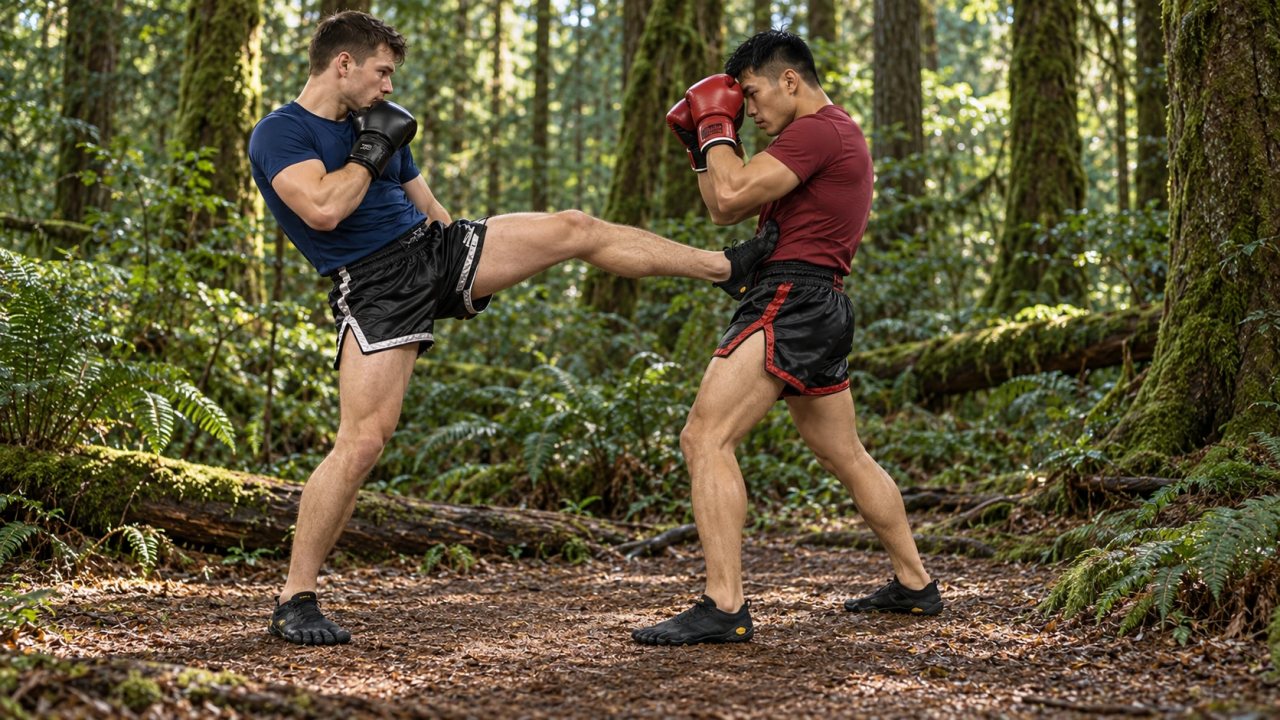
Sean demonstrates three ways to do this.
Combination 1: Fake Lead Teep → Rear Thrust Knee
Lift your lead knee as though you’re about to throw a Teep.
When your opponent reacts to the fake, step in and drive your Rear Thrust Knee (Khao / เข่า) forward.
The fake helps disguise your entry and can make your opponent hesitate just long enough for your Knee to land.
Combination 2: Fake Lead Teep → Thai Hop → Rear Uppercut Elbow
Start by lifting your lead knee to fake the Teep.
Instead of extending your leg, hop forward to close the distance.
As you enter close range, throw your Rear Uppercut Elbow (Sok Ngat / ศอกงัด).
The Teep feint gets your opponent thinking about defending a kick, while the Thai Hop quickly brings you into Elbow Range.
Combination 3: Fake Lead Teep → Triangle Step Left → Rear Round Kick
Lift your lead knee to make your opponent think another Teep is coming.
Instead of kicking, step diagonally to your left using a Triangle Step.
This changes your angle and puts you in position to throw your Rear Round Kick (Teh / เตะ).
You’re using the fake to draw a reaction, then changing your position before attacking.
Why These Feints Work
All three combinations start with the same movement: lifting your lead knee.
That’s what makes them useful.
Your opponent sees the same beginning but doesn’t know what’s coming next.
Will you throw the Teep? Drive in with a Knee? Close the distance with an Elbow? Or step off to the side and throw a Round Kick?
The more possibilities you give your opponent to think about, the harder you become to read.
My takeaway: Your Teep becomes a much better weapon once your opponent has to worry about what might come after it.
Learn More From Sean Fagan and fightTIPS
Sean Fagan is a professional Muay Thai fighter, instructor, and creator of the Muay Thai Guy YouTube channel.
He has spent years training and competing in Thailand and sharing instructional videos that help people improve their Muay Thai.
His Training Programs can be seen here: muay-thai-guy.com/about
This particular lesson appears on Shane Fazen’s fightTIPS channel, which covers Boxing, Muay Thai, MMA, and self-defense.
The fightTIPS channel can be found here: youtube.com/@fighttips
Put These Five Teep Techniques Into Your Training
The biggest lesson from this video is that you don’t need five different kicks to accomplish five different things.
You can take one basic Muay Thai technique and use it in several ways:
- Find your range before committing to an attack.
- Stop an aggressive opponent from coming forward.
- Drive your opponent backward and control their position.
- Attack the lead thigh to disrupt their balance and timing.
- Fake the Teep to create openings for your Knees, Elbows, and Round Kicks.
Each one serves a different purpose.
Of course, knowing these techniques and being able to use them against a moving opponent are two different things.
That takes practice.
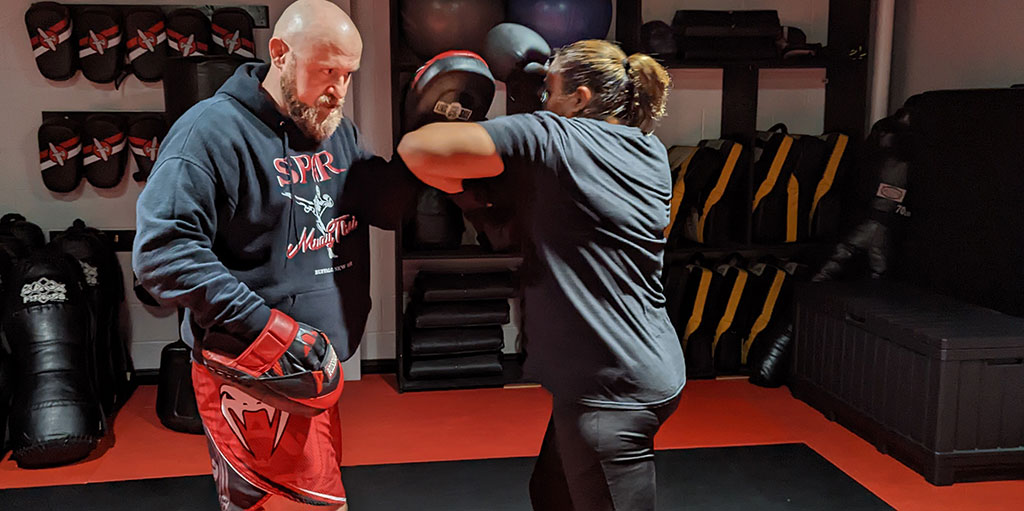
Start by working each technique with a partner holding pads. Once you’re comfortable, add movement and controlled sparring drills so you can work on your distance and timing.
The goal isn’t just to develop a powerful Teep. It’s to know when to use it, where to aim it, and what to do next.
Read next: Fix These 3 Teep Mistakes in Muay Thai
Read next: Tawanchai’s Powerful Teep: 5 Lessons From a Muay Thai World Champion
Train Muay Thai in Portland, Oregon
If you want to improve your Muay Thai, I offer private lessons in Portland, Oregon.
Want to learn more? Read about my Muay Thai private lessons.
We work on proper technique, timing, distance, defense, and how to put everything together.
If you’re in the Portland, Oregon area, reach out to me when you’re ready. Use the contact form on TrainWithSean.com.